Yin and Yang in Chinese Astrology: What the Terms Really Mean for Your Birth Chart
By Admin
With 0 comments
Yin and Yang in Chinese Astrology: What the Terms Really Mean for Your Birth Chart
Ever stared at a Chinese astrology chart and wondered why every pillar is labeled “Yin” or “Yang”? You’re not alone. Many newcomers ask:
“How do Yin and Yang actually affect the personality traits and life‑path that my chart predicts?”
This article tackles that exact question. We’ll walk through the theory, map it onto the twelve‑year zodiac cycle, and give you concrete, everyday ways to read and balance the Yin‑Yang pattern in your chart.
1. Yin‑Yang in a Garden – A Fresh Metaphor
Think of Yin and Yang as two complementary gardeners tending the same plot. Yang is the sun‑loving, energetic gardener who plants tall, fast‑growing vines. Yin is the moon‑lit, reflective gardener who nurtures deep‑rooted shrubs and cool‑weather herbs. Neither can create a thriving garden alone; the sun needs shade, the shade needs light. In Chinese cosmology the same principle applies to all phenomena—people, seasons, emotions, even the letters that make up a name.
- Yang = outward, active, bright, expanding, hard qualities.
- Yin = inward, receptive, dim, contracting, soft qualities.
When you see a chart labeled “Yang Wood” or “Yin Fire,” think of which gardener is currently holding the watering can.
2. Mapping Yin‑Yang onto the Ten Heavenly Stems
Chinese astrology builds its four‑pillar chart (year, month, day, hour) from two sets of symbols:
| Set | What it Represents | Yin/Yang Assignment |
|---|---|---|
| Heavenly Stems (10) | The celestial energy of the year, month, day, hour | Each stem is inherently Yin or Yang. Odd‑numbered stems are Yang, even‑numbered are Yin. |
| Earthly Branches (12) | The terrestrial animal sign (Rat, Ox, etc.) | Each branch also carries a Yin/Yang label, alternating every two signs. |
Quick Reference
- Yang Stems: Jia (Wood), Bing (Fire), Wu (Earth), Geng (Metal), Jia (Water) – all odd numbers.
- Yin Stems: Yi (Wood), Ding (Fire), Ji (Earth), Xin (Metal), Yi (Water) – all even numbers.
- Yang Branches: Rat, Dragon, Monkey, Dog, etc. (the first of each pair).
- Yin Branches: Ox, Snake, Horse, Pig, etc. (the second of each pair).
Practical Example: 1990‑02‑15 07:30
| Pillar | Calendar Value | Stem (Yin/Yang) | Branch (Yin/Yang) |
|---|---|---|---|
| Year | 1990 (Metal) | Geng – Yang Metal | Horse – Yin Horse |
| Month | February (Water) | Ren – Yang Water | Tiger – Yang Tiger |
| Day | 15th (Fire) | Ding – Yin Fire | Rabbit – Yin Rabbit |
| Hour | 07:30 (Dragon) | Bing – Yang Fire | Dragon – Yang Dragon |
Notice the alternating pattern: the chart is not a simple “all‑Yang” or “all‑Yin” picture. Your personal energy is a dynamic blend that shifts every two‑hour block of the day.
3. Yin‑Yang Meets the Five Elements – The Dance of Interaction
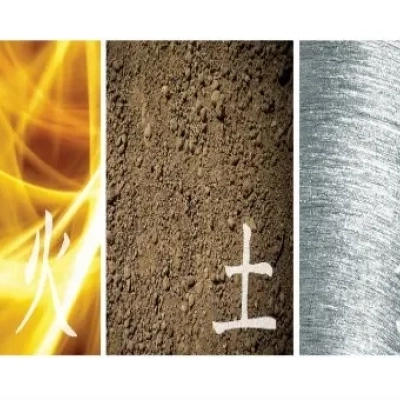
The Five Elements (Wood, Fire, Earth, Metal, Water) each have a Yin and a Yang aspect. When you combine the element with its polarity, you get ten distinct “energies.” These ten energies interact in two cycles:
- Generating (Shēng) Cycle – Yang Wood fuels Yang Fire, Yin Fire melts Yin Metal, etc.
- Controlling (Kè) Cycle – Yang Metal cuts Yang Wood, Yin Water extinguishes Yin Fire, and so on.
Why Polarity Matters
Imagine two friends playing tug‑of‑war. If both are pulling with the same hand (both Yang), the rope stretches but never snaps. If one pulls with the left hand (Yin) and the other with the right (Yang), the tension is balanced and the rope moves forward. In a chart, excess Yang can manifest as impatience, aggression, or burnout, while excess Yin may show up as withdrawal, indecision, or low stamina. The element’s nature tells you what is being expressed; the polarity tells you how it’s being expressed.
4. Your Personal Yin‑Yang Profile – Reading the Four Pillars
Step‑by‑Step Walkthrough
- Identify the Stems – Write down the stem for each pillar and note its polarity.
- Count the Dominant Polarity – Tally Yang vs. Yin across the four stems. The side with the higher count is your primary polarity.
- Check the Branches – Branches can reinforce or counterbalance the stem polarity. A Yang stem paired with a Yin branch often signals a moderating influence.
- Spot the Element‑Polarity Pairings – For each pillar, ask: Is this Yang Wood (expansive growth) or Yin Water (deep reflection)? The answer hints at the type of energy you’re likely to exhibit at that life stage.
Real‑World Example: Mei‑Ling, born 1978‑09‑23 14:45
| Pillar | Stem (Yin/Yang) | Branch (Yin/Yang) | Element‑Polarity |
|---|---|---|---|
| Year | Wu (Yang Earth) | Horse (Yin) | Yang Earth – stable, outwardly practical |
| Month | Xin (Yin Metal) | Rooster (Yang) | Yin Metal – precise, inwardly critical |
| Day | Ji (Yin Earth) | Dog (Yang) | Yin Earth – nurturing, quietly dependable |
| Hour | Ding (Yin Fire) | Monkey (Yang) | Yin Fire – creative spark that burns internally |
Tally: Yin stems = 3, Yang stems = 1 → Yin‑dominant chart.
Interpretation: Mei‑Ling tends to process the world internally, preferring thoughtful analysis over quick action. Her career success often comes from behind‑the‑scenes work (Yin Earth) and meticulous planning (Yin Metal). However, the Yang Earth year pillar gives her a pragmatic edge that helps her translate ideas into concrete results when needed.
5. Applying the Insight: Health, Relationships, and Career
Health – Balancing the Physical Yin/Yang
- Excess Yang may manifest as high blood pressure, insomnia, or a “always‑on” nervous system. Balancing tip: incorporate cooling foods (cucumber, watermelon) and calming practices (tai chi, meditation).
- Excess Yin can show up as low energy, poor digestion, or a tendency toward depression. Balancing tip: add warming spices (ginger, cinnamon) and dynamic movement (jogging, dancing).
Relationships – Matching Polarity with Partners
When two people meet, their Yin‑Yang profiles create a compatibility matrix:
| Partner A | Partner B | Typical Dynamic |
|---|---|---|
| Both Yang | Both Yang | Energetic, fast‑paced – may need scheduled downtime. |
| Both Yin | Both Yin | Deeply intuitive – risk of stagnation; introduce novelty. |
| Yang + Yin | Yin + Yang | Complementary – Yang ignites, Yin steadies. |
Practical Exercise: Write down the dominant polarity of your partner’s chart (you can find it on most free Chinese astrology calculators). If you’re Yang and they’re Yin, plan activities that let you lead (Yang) while they provide emotional grounding (Yin).
Career – Leveraging Your Dominant Polarity
- Yang‑dominant individuals thrive in roles that require quick decision‑making, leadership, and visible results (sales, emergency services, entrepreneurship).
- Yin‑dominant individuals shine in research, counseling, arts, and any field that rewards depth, patience, and behind‑the‑scenes mastery.
Case Study: Li Wei, a Yang‑Metal executive, found his energy waning after a year of nonstop meetings. By scheduling a weekly “Yin hour” of quiet reading and strategic planning, he re‑balanced his chart and reported a 30 % boost in productivity.
6. Everyday Ways to Harmonize Your Yin‑Yang
- Morning Sun vs. Evening Moon – If you’re Yang‑heavy, start your day with sunrise walks. If Yin‑heavy, wind down with moonlit meditation.
- Color Therapy – Wear red or orange to boost Yang; wear blue or black to soothe excess Yang and support Yin.
- Element‑Based Diet – Align meals with your dominant element (e.g., Wood → green leafy veg; Metal → white beans). Adjust cooking methods: steaming for Yin, grilling for Yang.
- Space Arrangement – In Feng Shui, place a water feature (Yin) opposite a bright lamp (Yang) to create a visual balance.
- Scheduled “Polarity Switch” – Once a week, deliberately act opposite to your natural tendency. A Yin‑type might schedule a public speaking club; a Yang‑type could book a silent retreat.
7. Common Misconceptions – Clearing the Fog
| Myth | Reality |
|---|---|
| Yin is “bad” and Yang is “good.” | Both are neutral; the goal is balance, not superiority. |
| Your chart is fixed forever. | While the four pillars are static, daily cycles (hourly, seasonal) constantly shift your Yin‑Yang balance. |
| If I’m Yin‑dominant I must be introverted. | Polarity influences style, not necessarily social preference. A Yin‑dominant person can be very outgoing if other chart factors (e.g., strong Fire element) are present. |
| Adding a “Yin” activity will instantly fix excess Yang. | Balance is gradual. Consistency over weeks yields measurable change. |
8. Quick‑Start Checklist for Readers
- [ ] Write down the stem of each pillar and mark Yin/Yang.
- [ ] Count which polarity appears more often.
- [ ] Identify any conflicting branch polarity that may moderate the dominant side.
- [ ] Choose one health tip (food, exercise) and one lifestyle tip (color, schedule) that counterbalances your excess.
- [ ] Re‑evaluate after one month—has your energy felt more even?
Final Thought
Yin and Yang are not abstract symbols locked away in ancient texts; they are living descriptors of how you interact with the world—the way you think, move, and relate. By decoding the Yin‑Yang pattern in your Chinese astrological chart, you gain a practical roadmap for health, love, and work. Treat the chart like a garden: notice which plants (energies) are thriving, which need pruning, and which could use a little extra water. With that awareness, you can cultivate a life that feels both dynamic and grounded, just like the two gardeners working side by side.
Posted in: Chinese Zodiac Tagged: Yin Yang, Chinese astrology, Chinese zodiac, Heavenly Stems, Earthly Branches, Five Elements, personal balance, astrology guide

Comments
Loading comments...