Five Elements of Chinese Astrology: Metal, Wood, Water, Fire and Earth
By Your-Astral-Bestie
With 0 comments
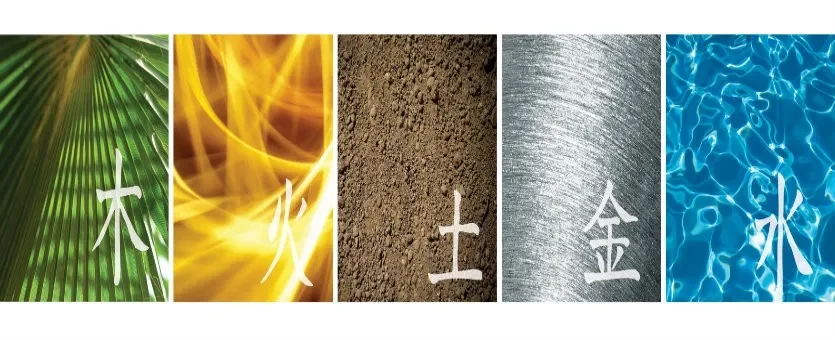
The Five Elements of Chinese astrology are an important part of traditional Chinese zodiac interpretation. Known as Metal, Wood, Water, Fire, and Earth, these five elements are used to describe different qualities, patterns, and symbolic influences associated with people and years.
Understanding the five elements of Chinese astrology can add another layer to your Chinese zodiac sign. Instead of looking only at an animal sign such as Rat, Dragon, or Horse, you can also explore the element associated with your birth year.
This guide explains the Chinese astrology elements in simple terms, shows how to find your element using the birth year, explains the limits of the last-digit method, and includes recent birth-year examples.
What Are the Five Elements of Chinese Astrology?
The traditional Chinese system known as Wu Xing includes five elements: Wood, Fire, Earth, Metal, and Water. Rather than describing physical substances alone, these elements represent symbolic qualities and patterns of change.
In Chinese astrology, the Five Elements are connected with the Chinese zodiac and the traditional cycle of Heavenly Stems and Earthly Branches. Each zodiac year has an associated elemental quality, creating combinations such as Wood Dragon, Fire Horse, or Metal Rat.
Traditionally, each element is associated with particular characteristics:
- Wood – growth, flexibility, creativity, and development
- Fire – enthusiasm, action, warmth, and expression
- Earth – stability, practicality, patience, and grounding
- Metal – determination, structure, discipline, and focus
- Water – adaptability, intuition, communication, and movement
These are traditional symbolic interpretations rather than scientifically established personality traits. They are best viewed as part of a cultural and spiritual system of interpretation.
Metal Personality
Metal is traditionally associated with strength, structure, determination, and discipline. People whose birth years are associated with Metal are sometimes described as focused, organized, independent, and persistent.
Metal symbolism can also represent clarity and the ability to establish boundaries. In traditional interpretations, Metal personalities may prefer clear goals and straightforward decisions.
The challenging side of Metal can be rigidity or being overly critical. Its strength is often connected with determination and the ability to stay committed to a goal.
Wood Personality
Wood represents growth, expansion, creativity, and flexibility. Traditional interpretations often associate Wood with people who enjoy learning, developing ideas, and building something over time.
Wood is also connected with cooperation and generosity. Like a growing tree, its symbolism suggests progress, adaptability, and the ability to reach toward new opportunities.
When out of balance, Wood symbolism can sometimes be associated with impatience or difficulty dealing with restrictions.
Water Personality
Water is traditionally associated with adaptability, communication, intuition, and movement. Water does not have to follow one fixed path; it can change direction and adjust to its surroundings.
For this reason, Water symbolism is often connected with people who are observant, flexible, imaginative, or comfortable responding to changing circumstances.
The challenging side of Water may be indecision, emotional uncertainty, or a tendency to change direction too often.
Fire Personality
Fire symbolizes energy, enthusiasm, warmth, confidence, and action. Traditional Chinese astrology may associate Fire with people who are expressive, ambitious, passionate, or naturally energetic.
Fire can represent the desire to act rather than wait. It is often connected with motivation, visibility, creativity, and leadership.
Its challenging side can include impatience, impulsiveness, or becoming overly intense.
Earth Personality
Earth represents stability, practicality, patience, and grounding. People associated with Earth are traditionally described as dependable, realistic, responsible, and steady.
Earth symbolism is connected with creating foundations and maintaining balance. It can be particularly useful when thinking about long-term plans, responsibility, and practical decisions.
The challenging side of Earth may be stubbornness, excessive caution, or resistance to change.
The Five Chinese Astrology Elements at a Glance
| Element | Traditional Associations | Possible Strengths |
|---|---|---|
| Metal | Structure, clarity, discipline | Determination, focus, organization |
| Wood | Growth, creativity, expansion | Flexibility, generosity, development |
| Water | Movement, intuition, adaptability | Communication, flexibility, observation |
| Fire | Energy, warmth, expression | Passion, confidence, enthusiasm |
| Earth | Stability, grounding, practicality | Patience, reliability, responsibility |
How to Find Your Chinese Zodiac Element
One of the easiest ways to identify the element associated with a Chinese zodiac year is to look at the last digit of the birth year.
This provides a quick way to identify the elemental association of the year's Heavenly Stem.
The Last-Digit Method
| Last Digit of Birth Year | Element |
|---|---|
| 0 or 1 | Metal |
| 2 or 3 | Water |
| 4 or 5 | Wood |
| 6 or 7 | Fire |
| 8 or 9 | Earth |
For example, a birth year ending in 6 or 7 has a Fire association, while a year ending in 0 or 1 has a Metal association.
Understanding the Limits of the Last-Digit Method
The last-digit method is useful as a quick reference, but it should not be confused with a complete Chinese astrology calculation.
- It uses the birth year: It identifies the element associated with the year's Heavenly Stem, not every element in a person's complete chart.
- January and early February can be complicated: Chinese zodiac years do not always begin on January 1. A person's actual zodiac year depends on the relevant traditional calendar boundary.
- The element does not determine personality: Traditional descriptions are symbolic interpretations rather than scientific personality assessments.
- BaZi is more detailed: Four Pillars of Destiny considers the year, month, day, and hour of birth, rather than relying only on the birth year.
Some Chinese astrology practitioners use Li Chun, the beginning of spring in the traditional solar-term system, as the boundary for certain calculations. Other Chinese zodiac references use the date of Chinese New Year. This is one reason different websites may occasionally give different results for people born around January or February.
For a simple introduction, the last-digit method is useful. For a detailed Chinese astrology or BaZi reading, more information is required.
Simple Worked Example: Finding the Element for 1996
Let's work through a simple example using the birth year 1996.
Step 1: Look at the last digit
The last digit of 1996 is 6.
Step 2: Match the digit to the element
The last-digit table tells us that:
6 or 7 = Fire
Therefore, 1996 has a Fire elemental association.
Step 3: Find the zodiac animal
1996 is traditionally associated with the Rat.
That gives us:
| Birth Year | 1996 |
|---|---|
| Last Digit | 6 |
| Element | Fire |
| Zodiac Animal | Rat |
| Combined Sign | Fire Rat |
This is a simple example of how the last-digit method works. However, someone born in January or early February 1996 should check the applicable Chinese calendar boundary before assuming they belong to the 1996 zodiac year.
Recent Chinese Zodiac Element Examples
Here are some recent birth years and their associated elements using the Heavenly Stem elemental cycle:
| Birth Year | Element |
|---|---|
| 2000 | Metal |
| 2001 | Metal |
| 2002 | Water |
| 2003 | Water |
| 2004 | Wood |
| 2005 | Wood |
| 2006 | Fire |
| 2007 | Fire |
| 2008 | Earth |
| 2009 | Earth |
| 2010 | Metal |
| 2011 | Metal |
| 2012 | Water |
| 2013 | Water |
| 2014 | Wood |
| 2015 | Wood |
| 2016 | Fire |
| 2017 | Fire |
| 2018 | Earth |
| 2019 | Earth |
| 2020 | Metal |
| 2021 | Metal |
| 2022 | Water |
| 2023 | Water |
| 2024 | Wood |
| 2025 | Wood |
| 2026 | Fire |
| 2027 | Fire |
These elemental associations follow the repeating Heavenly Stem cycle. For people born around January or February, the actual Chinese zodiac year should be checked rather than relying only on the Gregorian calendar year.
Chinese Zodiac Animal vs. Element
Your Chinese zodiac animal and your Chinese zodiac element are related, but they are not the same thing.
The Chinese zodiac contains 12 animals, including Rat, Ox, Tiger, Rabbit, Dragon, Snake, Horse, Goat, Monkey, Rooster, Dog, and Pig.
The Five Elements add another layer to this system. This is why you may see descriptions such as Wood Dragon, Fire Horse, Water Rabbit, or Metal Rat.
Two people can therefore have the same zodiac animal while having different elemental associations if they were born in different cycles.
The 60-Year Chinese Zodiac and Element Cycle
The Chinese zodiac animal cycle repeats every 12 years, while the Heavenly Stem elemental cycle works together with the Earthly Branch animal cycle to create a traditional 60-year cycle.
This means the exact combination of an animal and element does not repeat every 12 years. Instead, the same animal-element combination returns after 60 years.
For example, a person born in one Fire Rat year may share the same traditional combination with someone born 60 years earlier or later, although their complete astrology charts can still be very different.
Frequently Asked Questions About the Five Elements of Chinese Astrology
What are the five elements of Chinese astrology?
The five elements are Wood, Fire, Earth, Metal, and Water. They form part of the traditional Chinese system known as Wu Xing and are used symbolically in Chinese astrology and other traditional practices.
How do I find my Chinese zodiac element?
For a quick year-based reference, look at the final digit of your birth year. 0 or 1 corresponds to Metal, 2 or 3 to Water, 4 or 5 to Wood, 6 or 7 to Fire, and 8 or 9 to Earth.
What element is 2026?
2026 is associated with the Fire element. It is traditionally known as a Fire Horse year, subject to the applicable Chinese zodiac calendar boundary.
What element is 2025?
2025 is associated with the Wood element and is traditionally known as a Wood Snake year.
What element is 2024?
2024 is associated with the Wood element and is traditionally known as a Wood Dragon year.
Can two people have the same Chinese zodiac animal but different elements?
Yes. The 12 zodiac animals repeat every 12 years, while the animal-element combinations follow the longer 60-year cycle.
Does my Chinese zodiac element determine my personality?
No. Chinese zodiac elements are part of a traditional symbolic system and should not be treated as a scientifically proven way to determine personality or behavior.
Why does another website give me a different Chinese zodiac element?
Differences can occur because Chinese zodiac years do not necessarily begin on January 1. People born around January or February may also be classified differently depending on whether a calculation uses Chinese New Year or the traditional solar-term boundary such as Li Chun.
What is the difference between the Chinese zodiac animal and the element?
The animal is one of the 12 zodiac signs, while the element is one of the five traditional elemental qualities. Together they create combinations such as Wood Dragon, Fire Horse, or Metal Rat.
What can I learn from my Chinese zodiac element?
Traditional interpretations use the element as a symbolic way to explore qualities such as adaptability, determination, creativity, stability, or enthusiasm. It can be interesting for reflection and cultural exploration, but it should not be treated as a scientific personality test.
Final Thoughts
The Five Elements of Chinese astrology offer an interesting way to explore the symbolism behind the Chinese zodiac. Metal, Wood, Water, Fire, and Earth each represent different qualities and patterns within the traditional system.
The last-digit method makes it easy to find the general elemental association of a birth year, but it is only a starting point. If you want a more detailed Chinese astrology interpretation, factors such as the exact birth date, birth time, zodiac animal, and complete BaZi chart can provide much more information.
Whether you approach Chinese astrology as a cultural tradition, a spiritual practice, or simply a fascinating system of symbolism, the Five Elements provide another way to look at the stories and patterns connected with the Chinese zodiac.
Posted in: Chinese Zodiac Tagged: Chinese astrology five elements, five elements of Chinese astrology, Chinese zodiac elements


Comments
Loading comments...