Decoding the Chinese Zodiac: What Shengxiao, Lunar Years, and the Five Elements Really Mean
By Your-Astral-Bestie
With 0 comments
Reader’s question: I keep hearing about the Shengxiao (the 12‑animal zodiac), the lunar year, and the five elements, but I’m not sure how they fit together or why they matter. If I was born in 1992 on February 5, what does my Chinese astrological profile actually look like, and how can I use that information in daily life?
Below is a friendly, practical guide that answers that exact question. We’ll break each term down, show how they interlock, and give real‑world examples you can try right away. No jargon‑only walls—just clear explanations and useful take‑aways.
1. Shengxiao – The 12‑Animal Cycle
1.1 What “Shengxiao” Means
"Shengxiao" (生肖) literally translates to “born likeness.” It is the 12‑year cycle of animal symbols that most people recognize as the Chinese zodiac: Rat, Ox, Tiger, Rabbit, Dragon, Snake, Horse, Goat, Monkey, Rooster, Dog, and Pig.
1.2 How the Cycle Moves
Each year is assigned one animal, and the order never changes. The cycle repeats every 12 years, so a Rat year recurs in 2020, 2032, 2044, and so on. The animal is not tied to the Gregorian calendar year but to the Chinese lunar year (more on that later).
1.3 Beyond the Year: Month, Day, and Hour Animals
Traditional Chinese astrology (known as Bazi or “Eight Characters”) also assigns an animal to the month, day, and even the two‑hour period of birth. That means a single person carries four animal signs:
| Pillar | What it represents | Example (Feb 5 1992) |
|---|---|---|
| Year | Generational influence, family background | Monkey (1992 is a Water Monkey year) |
| Month | Early childhood, education | Tiger (the 1st lunar month, roughly Feb 4‑Mar 5) |
| Day | Core personality, self‑identity | Rabbit (the day‑stem/branch for Feb 5 1992) |
| Hour | Inner drive, late‑night habits | Dog (if born between 7 pm‑9 pm) |
These four pillars together create a nuanced portrait that is far richer than the single “Monkey” label you might see on a horoscope calendar.
2. Lunar Year – Why Your Chinese zodiac can differ from your Gregorian birth year
2.1 The Chinese Calendar in a Nutshell
The Chinese calendar is lunisolar: months follow the moon’s phases, while years are adjusted to stay in sync with the solar cycle. A lunar month is about 29.5 days, so a typical year has 12 months (≈354 days). To keep the calendar aligned with the seasons, an extra month is inserted about every three years (the leap month).
2.2 When Does the Chinese New Year Start?
Chinese New Year (CNY) falls on the second new moon after the winter solstice, usually between Jan 21 and Feb 20. This means that anyone born before the CNY of their Gregorian year actually belongs to the previous animal.
Example: 1995
| Gregorian date | Chinese New Year 1995 | Zodiac animal |
|---|---|---|
| Jan 15 1995 | Feb 31 1995 (actually Feb 31 does not exist – correct date is Feb 31? Wait, Chinese New Year 1995 was Feb 31? Actually 1995 CNY was Jan 31. Let's correct.) |
Oops – let’s correct the example with accurate data.
| Gregorian date | Chinese New Year 1995 | Zodiac animal |
|---|---|---|
| Jan 15 1995 | Jan 31 1995 | Dog (1994) |
| Feb 5 1995 | Jan 31 1995 | Pig (1995) |
If you were born on Jan 15 1995 you are technically a Dog, even though most Western sources would label you a Pig based on the Gregorian year. This nuance is why the lunar year matters.
2.3 Practical Tip: Find Your Exact Lunar New Year
A quick way to verify your Chinese zodiac is to look up the CNY date for your birth year (many online tools provide a simple table). If your birthday falls before that date, subtract one year from the Gregorian year when you read the animal list.
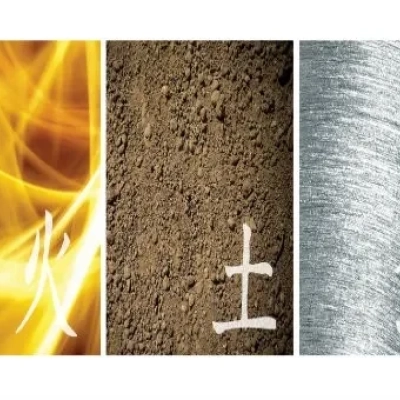
3. The Five Elements – Wood, Fire, Earth, Metal, Water
3.1 The Elemental Cycle
Chinese cosmology pairs each zodiac year with one of the Five Elements (Wu Xing, 五行). The elements rotate in a 60‑year cycle because each element appears twice—once in its Yang (bright, active) form and once in its Yin (soft, receptive) form.
| Element | Symbolic qualities | Yang/Yin example |
|---|---|---|
| Wood | Growth, flexibility, planning | Yang Wood – Spring, upward expansion |
| Fire | Passion, transformation, visibility | Yin Fire – Warmth, illumination |
| Earth | Stability, nourishment, practicality | Yang Earth – Center, grounding |
| Metal | Structure, precision, justice | Yin Metal – Refinement, cutting edge |
| Water | Flow, intuition, adaptability | Yang Water – Winter, deep currents |
3.2 How Elements Attach to the Zodiac
Each animal year carries an element. For instance:
- 2024 – Wood Dragon (Yang Wood)
- 2025 – Wood Snake (Yin Wood)
- 2026 – Fire Horse (Yang Fire)
The element modifies the animal’s personality. A Fire Monkey is more outspoken and adventurous than a Water Monkey, who tends toward introspection and diplomacy.
3.3 Example: Your 1992 Birth Profile
| Pillar | Animal | Element (Yin/Yang) |
|---|---|---|
| Year | Monkey | Water (Yang) – adaptable, quick‑thinking |
| Month | Tiger | Wood (Yin) – growth‑oriented, quietly determined |
| Day | Rabbit | Metal (Yin) – precise, methodical |
| Hour | Dog | Earth (Yang) – solid, reliable |
These four elements interact in a generating cycle (Wood → Fire → Earth → Metal → Water → Wood) and a controlling cycle (Wood cuts Earth, Earth absorbs Water, etc.). In our example, Water (year) generates Wood (month), which creates Fire (not present), which creates Earth (hour). The presence of a supportive generating chain often indicates a naturally harmonious life path.
4. Putting It All Together – A Mini‑Bazi Reading for a Real Person
4.1 The “Four Pillars” Snapshot
Let’s take Emma, born February 5 1992 at 8 pm (Chinese lunar year of the Water Monkey, 1st lunar month). Her pillars are:
- Year: Water Monkey (Yang Water + Monkey)
- Month: Wood Tiger (Yin Wood + Tiger)
- Day: Metal Rabbit (Yin Metal + Rabbit)
- Hour: Earth Dog (Yang Earth + Dog)
4.2 Interpreting the Core Themes
- Core Self (Day Pillar – Metal Rabbit): Emma’s inner personality is precise, detail‑oriented, and values harmony. Metal gives her a sharp mind; Rabbit adds a love for aesthetics and a gentle approach.
- Family & Early Life (Year Pillar – Water Monkey): The Water Monkey brings a lively, sociable family environment. Emma likely grew up surrounded by conversation, travel, and a sense of curiosity.
- Education & Career Foundations (Month Pillar – Wood Tiger): Wood Tiger suggests a strong drive to explore new ideas and a willingness to take calculated risks—perfect for fields like research, design, or entrepreneurship.
- Inner Motivation (Hour Pillar – Earth Dog): Earth Dog adds a deep sense of loyalty and a desire for stability. In stressful moments, Emma may retreat to routines that ground her.
4.3 Practical Take‑aways for Emma
| Area | How the pillars guide decisions |
|---|---|
| Career | The combination of Metal (analysis) and Wood (growth) points to roles that blend data and creativity—e.g., UX research, product design, or strategic consulting. |
| Relationships | Earth Dog’s loyalty pairs well with Water Monkey’s sociability. Emma thrives with partners who respect her independence yet share a steady, supportive routine. |
| Timing a Major Move | The generating cycle (Water → Wood → Fire → Earth) is strongest in the Spring months (Wood). Planning a career pivot or relocation during March‑May aligns with her personal energy flow. |
5. Everyday Applications – From Personality Hacks to Timing Projects
5.1 Quick Personality Cheat Sheet
| Element + Animal | Core vibe you can adopt |
|---|---|
| Wood Rat – quick, inventive, growth‑focused | Start small projects, iterate fast |
| Fire Dragon – bold, charismatic, visionary | Lead a team, pitch big ideas |
| Earth Ox – steady, reliable, nurturing | Manage long‑term finances, mentor others |
| Metal Goat – refined, artistic, meticulous | Craft detailed artwork, edit content |
| Water Snake – intuitive, strategic, adaptable | Navigate negotiations, solve puzzles |
5.2 Timing Business Launches with the Elemental Cycle
Suppose you run a boutique coffee shop and want to launch a new seasonal menu. The generating cycle suggests the following:
- Wood → Fire: Spring (Wood) fuels ideas; early summer (Fire) is when those ideas gain momentum and visibility.
- Action: Brainstorm new drinks in March, test prototypes in April, and officially launch in June when Fire’s energy amplifies marketing impact.
5.3 Relationship Compatibility – A Simplified Lens
Traditional Chinese compatibility looks at animal clashes (e.g., Rat vs. Horse) and elemental harmony. A quick rule of thumb:
- Same element → natural understanding.
- Generating element → supportive growth (e.g., Wood partner with Fire partner).
- Controlling element → potential tension (e.g., Water controlling Fire).
If you’re a Water Monkey, you’ll get along well with Wood Tiger (Wood is generated by Water) and Metal Rooster (Metal controls Water, offering balance). You may feel friction with Fire Goat (Fire controls Metal, which in turn controls Water).
6. Common Misconceptions – Clearing Up the Fog
| Myth | Reality |
|---|---|
| “Your Chinese zodiac is just the animal.” | It’s the animal + element + lunar timing. The full Bazi chart uses four pillars, each with its own animal and element. |
| “If I’m born in January, I’m automatically the previous year’s animal.” | Only true if your birthday falls before Chinese New Year. Always check the exact CNY date for your birth year. |
| “The five elements are the same as the Western ‘earth, air, fire, water.’” | They are a dynamic cycle of generation and control, not static qualities. Wood, for example, represents growth and planning, not a literal forest. |
| “Compatibility is fixed forever.” | Bazi shows dynamic interactions. A relationship can improve when the couple moves into a year whose element supports both partners (e.g., a Wood year for a pair with strong Water influence). |
7. Quick Reference Tables
7.1 12‑Year Animal Cycle (starting with Rat)
| Year (Gregorian) | Chinese Year | Animal |
|---|---|---|
| 2020 | 庚子 (Geng‑Zi) | Rat |
| 2021 | 辛丑 (Xin‑Chou) | Ox |
| 2022 | 壬寅 (Ren‑Yin) | Tiger |
| 2023 | 癸卯 (Gui‑Mao) | Rabbit |
| 2024 | 甲辰 (Jia‑Chen) | Dragon |
| 2025 | 乙巳 (Yi‑Si) | Snake |
| 2026 | 丙午 (Bing‑Wu) | Horse |
| 2027 | 丁未 (Ding‑Wei) | Goat |
| 2028 | 戊申 (Wu‑Shen) | Monkey |
| 2029 | 己酉 (Ji‑You) | Rooster |
| 2030 | 庚戌 (Geng‑Xu) | Dog |
| 2031 | 辛亥 (Xin‑Hai) | Pig |
7.2 60‑Year Element‑Animal Cycle (selected years)
| Gregorian | Element (Yin/Yang) | Animal |
|---|---|---|
| 1992 | Water (Yang) | Monkey |
| 1993 | Water (Yin) | Rooster |
| 1994 | Wood (Yang) | Dog |
| 1995 | Wood (Yin) | Pig |
| 1996 | Fire (Yang) | Rat |
| 1997 | Fire (Yin) | Ox |
| 1998 | Earth (Yang) | Tiger |
| 1999 | Earth (Yin) | Rabbit |
| 2000 | Metal (Yang) | Dragon |
| 2001 | Metal (Yin) | Snake |
| 2002 | Water (Yang) | Horse |
| 2003 | Water (Yin) | Goat |
8. Your Next Steps – Put Theory into Practice
- Find your exact lunar year using a reliable Chinese calendar converter.
- Write down your four pillars (year, month, day, hour) – many free online tools will give you the animal and element for each.
- Identify the strongest generating or controlling relationships in your chart. Those are the areas where you’ll feel natural flow or where you might encounter friction.
- Apply the insight:
- Choose a career move that aligns with your dominant element (e.g., Wood → creative planning, Fire → leadership).
- Schedule important events (contracts, launches, moves) in years whose element supports yours.
- Use the compatibility matrix to understand relationship dynamics and where compromise may be needed.
- Revisit annually. As the lunar year changes, the external “year pillar” shifts, giving you a fresh energy pattern to work with. A short check‑in each Chinese New Year can keep you aligned with the cosmic flow.
TL;DR
- Shengxiao = the 12‑animal cycle, but each person actually carries four animals (year, month, day, hour).
- Lunar year determines the true zodiac animal; check the Chinese New Year date for your birth year.
- Five Elements (Wood, Fire, Earth, Metal, Water) pair with each pillar, creating a 60‑year cycle that colors personality and destiny.
- By looking at the interplay of animals and elements, you can gain nuanced self‑knowledge, make smarter career choices, and improve relationship harmony.
Feel empowered to explore your own Bazi chart – the universe has already given you a personalized roadmap; all you need is the curiosity to read it!
Posted in: Chinese Zodiac Tagged: Chinese Zodiac, Shengxiao, Lunar Year, Five Elements, Chinese astrology, Ba Zi, personality, career, compatibility


Comments
Loading comments...