What Is a Star Chart? Understanding Your Birth Chart in Astrology
By Admin
With 0 comments
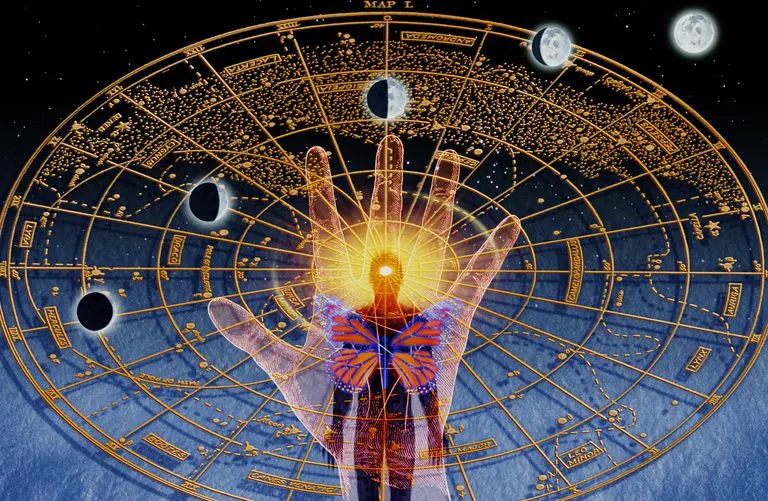
Have you ever looked at an astrology chart and wondered what all those circles, symbols, planets, and lines actually mean?
A star chart, often called a birth chart or natal chart, is a map of the sky calculated for a particular date, time, and location. In astrology, it is used to explore the positions of the Sun, Moon, planets, zodiac signs, and houses at the moment a person was born.
Think of it as a snapshot of the sky at one specific moment.
While a daily horoscope usually focuses on your zodiac sign, a birth chart can provide a much more detailed picture of your astrological profile.
What Is a Star Chart?
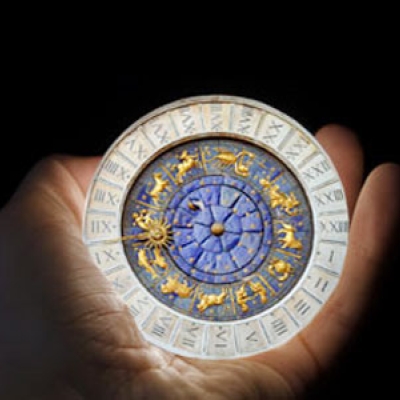
A star chart in astrology is a circular diagram showing where celestial bodies were positioned at a particular time and place.
To calculate a birth chart accurately, astrologers traditionally use three important pieces of information:
- Date of birth
- Exact or approximate time of birth
- Place of birth
The date helps determine the positions of the celestial bodies, while the time and location are especially important for calculating the Ascendant, or rising sign, and the twelve houses.
This is why two people born on the same day can still have noticeably different birth charts if they were born at different times or locations.
What Does a Birth Chart Show?
A typical astrology birth chart contains several major components. The most important are the zodiac signs, planets, houses, and aspects.
Each part provides a different piece of the overall picture.
The Zodiac Signs
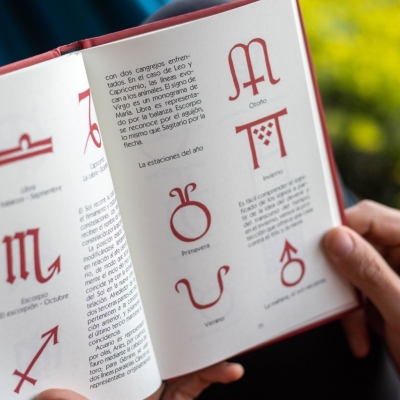
The zodiac is divided into twelve signs:
- Aries
- Taurus
- Gemini
- Cancer
- Leo
- Virgo
- Libra
- Scorpio
- Sagittarius
- Capricorn
- Aquarius
- Pisces
In astrology, the signs describe different qualities and styles of expression. The position of a planet in a particular sign is traditionally interpreted as showing how that planet's themes may be expressed.
For example, the Sun in Aries is interpreted differently from the Sun in Pisces, even though both placements involve the Sun.
The Sun, Moon, and Planets
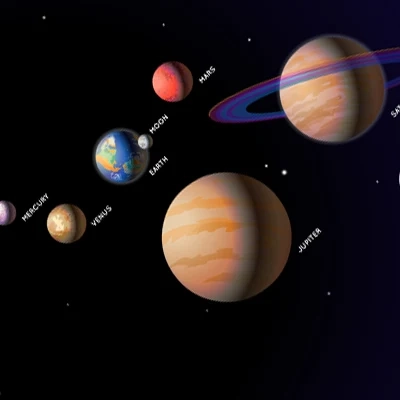
The planets and other major points in a birth chart represent different areas of experience in traditional astrology.
- Sun: identity, vitality, and sense of self
- Moon: emotions, instincts, and inner needs
- Mercury: communication and thinking
- Venus: love, attraction, values, and relationships
- Mars: action, motivation, desire, and drive
- Jupiter: growth, opportunity, and beliefs
- Saturn: responsibility, discipline, and limitations
- Uranus: change, independence, and innovation
- Neptune: imagination, spirituality, and ideals
- Pluto: transformation, power, and deep change
The meaning becomes more specific when astrologers consider both the planet and the zodiac sign it occupies.
What Are the Twelve Houses?
The twelve houses are another major part of a birth chart.
While the zodiac signs describe how something may be expressed, the houses are traditionally used to describe where those themes may appear in life.
The twelve houses are commonly associated with areas such as identity, money, communication, home, creativity, work, relationships, shared resources, beliefs, career, friendships, and personal growth.
For example, the 7th House is traditionally associated with partnerships and one-to-one relationships, while the 10th House is commonly associated with career, reputation, and public life.
What Is the Rising Sign?
The rising sign, also called the Ascendant, is the zodiac sign that was rising on the eastern horizon at the time of birth.
Because the Ascendant changes relatively quickly, the exact birth time can be important when calculating it.
In traditional astrology, the rising sign is often associated with how a person approaches the world, their outward style, and the way others may initially perceive them.
This is one reason knowing only your Sun sign does not tell the whole story of your birth chart.
What Are Aspects in a Birth Chart?
If you look at a birth chart, you may notice lines connecting different planets.
These lines represent aspects, which are angular relationships between planets and other chart points.
Some common aspects include:
- Conjunction: two points are close together
- Opposition: two points are approximately opposite each other
- Square: two points form a challenging angular relationship
- Trine: two points form a harmonious relationship
- Sextile: two points form a traditionally supportive relationship
Astrologers interpret these relationships as another layer of information about how different parts of a person's chart may interact.
Why Is Your Birth Time Important?
Your date of birth can determine your Sun sign, but your exact birth time can provide considerably more information for a natal chart.
The birth time helps determine the Ascendant and house placements. Even a difference of a few hours can change the house positions significantly.
If you do not know your exact birth time, you can still explore some parts of your chart, but certain calculations may be less precise.
Star Chart vs. Horoscope: What's the Difference?
The terms star chart, birth chart, and horoscope are sometimes used interchangeably, but they are not exactly the same thing.
A birth chart is a detailed map calculated for a specific person, date, time, and location.
A horoscope is a broader term that can refer to an astrological interpretation or forecast. Daily, weekly, monthly, and yearly horoscopes are commonly based on zodiac signs and current planetary movements.
A birth chart is therefore more personalized than a general Sun-sign horoscope.
Can a Star Chart Predict Your Future?
Many people use astrology as a way to reflect on personality, relationships, life themes, and personal choices. However, a birth chart should not be treated as a guaranteed prediction of what will happen in your life.
Astrological interpretations are symbolic and can be understood in different ways.
Instead of asking, “What will definitely happen to me?”, it can be more useful to ask:
- What patterns might I want to understand?
- What are my natural strengths?
- Where might I experience challenges?
- How can I become more aware of my choices?
Used this way, a birth chart can be an interesting tool for self-reflection and exploration.
How to Start Reading Your Birth Chart
If you're new to astrology, you don't need to understand the entire chart at once.
Start with these three important placements:
- Sun Sign – traditionally associated with identity and self-expression.
- Moon Sign – traditionally associated with emotions and inner needs.
- Rising Sign – traditionally associated with your outward approach and first impression.
These three placements are often called the “Big Three” in modern astrology.
Once you understand them, you can explore Venus for relationships, Mars for motivation, Mercury for communication, and the houses and aspects for additional detail.
What Does Your Star Chart Say About You?
Your birth chart can be much more detailed than your daily horoscope.
It combines the zodiac signs, planets, houses, the Ascendant, and planetary aspects into one unique chart based on your birth information.
Whether you are interested in astrology for entertainment, self-reflection, relationships, or simply curiosity, learning how to read a star chart can open the door to a much deeper understanding of astrology.
Find Your Zodiac Sign
Don't know your zodiac sign yet?
Enter your birth date to discover your zodiac sign, then explore your daily, weekly, monthly, and yearly horoscope for more astrology insights.
Astrology is a symbolic tradition and should be enjoyed as a source of reflection and entertainment. It should not be considered a substitute for professional advice or scientific prediction.
Posted in: Astrology Guides Tagged: star chart, birth chart, natal chart, astrology chart, what is a star chart, astrology birth chart, how to read a birth chart, zodiac signs, astrology houses, planets in astrology, horoscope chart, natal astrology

Comments
Loading comments...