Planets and Points in Astrology: A Beginner's Guide
By Admin
With 0 comments
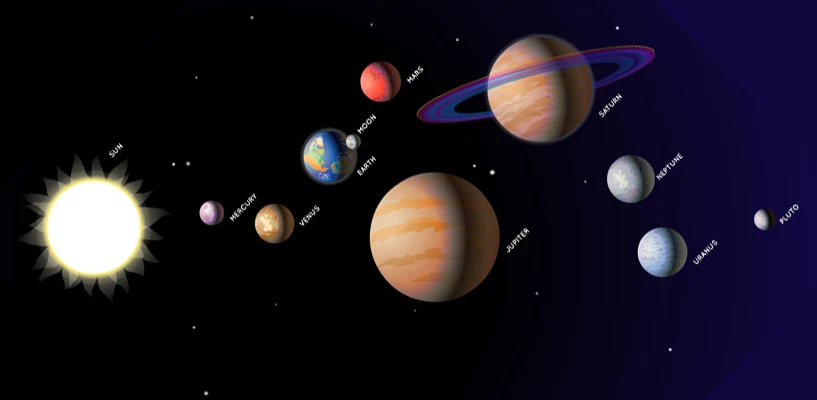
If you are beginning to explore astrology, you will quickly discover that there is much more to a birth chart than your zodiac Sun sign.
The planets, signs, houses, and important chart points all play different roles in an astrological interpretation. Each one represents a different theme, and astrologers consider their positions and relationships when interpreting a natal chart.
Understanding the basic meanings of the planets and major points is a good first step toward learning how an astrology birth chart is put together.
What Are Planets in Astrology?
In astrology, the planets are traditionally associated with different areas of human experience and personality.
The Sun and Moon are included in astrology even though the Moon is Earth's natural satellite and the Sun is a star. Modern astrology also commonly includes Mercury, Venus, Mars, Jupiter, Saturn, Uranus, Neptune, and Pluto.
Each planet is interpreted symbolically. Its meaning can change depending on the zodiac sign it occupies, the house it is located in, and its relationships or aspects to other planets.
For example, Mercury is traditionally associated with communication and thinking, while Venus is associated with relationships, attraction, values, and aesthetics.
The Sun
The Sun is one of the most important points in an astrological chart. It is traditionally associated with identity, vitality, self-expression, confidence, and personal purpose.
Your Sun sign is the zodiac sign most people mean when they ask, "What's your zodiac sign?"
For example, someone born while the Sun was in Leo is traditionally described as having Leo as their Sun sign.
Learn more about what a Sun sign is and how it is used in astrology.
The Moon
The Moon is traditionally associated with emotions, instincts, habits, comfort, security, and the inner self.
While the Sun is often interpreted in terms of conscious identity and self-expression, the Moon is commonly associated with emotional responses and the way a person processes experiences internally.
The Moon also moves relatively quickly through the zodiac, which is why a person's Moon sign can differ from their Sun sign.
Mercury
Mercury is traditionally associated with communication, thinking, learning, information, language, and the way people process and exchange ideas.
In a birth chart, astrologers may examine Mercury's zodiac sign and house to interpret someone's communication style and approach to learning and decision-making.
Mercury is traditionally associated with Gemini and Virgo.
Venus
Venus is traditionally associated with love, relationships, attraction, beauty, pleasure, values, and personal tastes.
Astrologers may look at Venus when interpreting relationship preferences, social interaction, affection, and the things a person finds beautiful or enjoyable.
Venus is traditionally associated with Taurus and Libra.
Mars
Mars is traditionally associated with action, motivation, courage, desire, energy, initiative, and the way a person pursues goals.
Astrologically, Mars can also be considered when interpreting how someone handles competition, conflict, frustration, and physical energy.
Mars is traditionally associated with Aries. In traditional astrology, Mars is also the ruler of Scorpio, while modern astrology commonly associates Scorpio with Pluto.
Jupiter
Jupiter is traditionally associated with expansion, learning, optimism, growth, opportunity, philosophy, and the search for meaning.
Astrologers may interpret Jupiter as representing areas where a person seeks to broaden their experience or develop their understanding of the world.
Jupiter is traditionally associated with Sagittarius and is also the traditional ruler of Pisces.
Saturn
Saturn is traditionally associated with responsibility, discipline, boundaries, patience, structure, and long-term development.
Astrological interpretations often connect Saturn with lessons that develop through time, experience, commitment, and dealing with limitations.
Saturn is traditionally associated with Capricorn and is also the traditional ruler of Aquarius.
Uranus
Uranus is associated in modern astrology with change, independence, innovation, disruption, originality, and unexpected developments.
Its symbolism is often connected with breaking from established patterns and looking for new ways of doing things.
Uranus is commonly associated with Aquarius in modern astrology.
Neptune
Neptune is traditionally associated in modern astrology with imagination, dreams, spirituality, intuition, ideals, compassion, and the less tangible aspects of experience.
Its symbolism can also relate to confusion or idealization when reality and expectations become difficult to separate.
Neptune is commonly associated with Pisces in modern astrology.
Pluto
Pluto is associated in modern astrology with transformation, power, deep psychological processes, endings, renewal, and profound change.
Because Pluto moves very slowly through the zodiac, astrologers often consider it a generational influence as well as a personal chart factor.
Pluto is commonly associated with Scorpio in modern astrology.
What Are Points in Astrology?
Not everything used in an astrological birth chart is a planet.
Astrologers also use several important mathematical or geometric points. These points can be calculated from the relationship between the Earth, Sun, Moon, the horizon, and other chart factors.
Some of the most commonly discussed points include the Ascendant, Midheaven, North Node, South Node, Part of Fortune, Vertex, and Chiron.
The Ascendant or Rising Sign
The Ascendant, commonly called the Rising sign, is the zodiac sign that was rising on the eastern horizon at the exact time and location of birth.
It marks the beginning of the first house in many astrological house systems.
Astrologers traditionally associate the Ascendant with outward presentation, first impressions, personal approach, and the way someone engages with the world.
Because the Ascendant depends on the exact time and location of birth, it can change relatively quickly compared with the Sun sign.
The Midheaven
The Midheaven, or MC, is one of the four major angles of an astrological chart.
It is associated with the highest point of the chart and is commonly connected with career, public life, reputation, achievement, and one's visible role in society.
The Midheaven is particularly important when astrologers are examining professional direction and long-term ambitions.
The North Node
The North Node is a mathematical point associated with the Moon's orbit and its intersection with the apparent path of the Sun.
Astrologers often interpret the North Node symbolically as an area of development, growth, or experiences that may feel unfamiliar but significant.
Some astrological traditions connect the North Node with life lessons or spiritual development.
These interpretations are part of astrology and should not be confused with scientifically established descriptions of human development.
The South Node
The South Node is directly opposite the North Node in an astrological chart.
Astrologers often interpret it as representing familiar patterns, tendencies, experiences, or qualities that a person may naturally fall back on.
The North and South Nodes are therefore commonly interpreted together rather than separately.
Chiron
Chiron is a small body orbiting between the orbits of Saturn and Uranus. In astrology, it is often associated with the symbolic concept of the "wounded healer."
Astrological interpretations of Chiron often focus on areas of vulnerability, emotional wounds, personal growth, and the possibility of developing wisdom through difficult experiences.
Chiron is not one of the traditional seven classical planets, but it has become an important point of interest in modern astrology.
Part of Fortune
The Part of Fortune, sometimes called Fortuna, is a calculated point rather than a physical celestial body.
Astrologers traditionally associate it with themes such as prosperity, circumstances, well-being, and the ways in which a person may experience a sense of ease or fulfillment.
Its exact calculation can vary depending on the astrological tradition and whether a day or night chart is being used.
The Vertex
The Vertex is another calculated point found in the western portion of many astrological charts.
Some astrologers associate the Vertex with significant encounters, relationships, or events that seem to arrive unexpectedly.
It is sometimes described using ideas such as fate or destined connections, although these interpretations vary among astrologers.
Sun/Moon Midpoint
The Sun/Moon midpoint is the point halfway between the positions of the Sun and Moon in an astrological chart.
Some astrologers use planetary midpoints to explore relationships between different parts of a chart.
The Sun/Moon midpoint is sometimes interpreted in connection with relationships, personal integration, and the balance between identity and emotional needs.
Eros
Eros is an asteroid used by some modern astrologers in more specialized birth-chart interpretations.
Astrologers who use Eros may associate it with desire, attraction, passion, creativity, and erotic expression.
It is not part of every astrology system, so its interpretation is generally considered an optional or specialized addition to a birth chart.
How Planets and Points Work Together
One of the most important things to understand about astrology is that astrologers generally do not interpret a planet or point in isolation.
The meaning can depend on several factors, including:
- The zodiac sign where the planet or point is located
- The astrological house it occupies
- The aspects it forms with other planets
- Whether the planet is moving retrograde
- The overall pattern of the birth chart
For example, saying that Venus represents relationships gives only a general idea. An astrologer may interpret Venus differently depending on its sign, house, and aspects.
What Are Aspects in Astrology?
Aspects describe particular angular relationships between planets and other chart points.
Some commonly discussed aspects include the conjunction, opposition, trine, square, and sextile.
Astrologers interpret these relationships as symbolic connections between different areas of a person's chart.
For example, a conjunction occurs when two chart factors are close together, while an opposition occurs when they are approximately opposite each other.
Learning about aspects can help you understand why a birth chart is much more detailed than simply knowing someone's zodiac sign.
Why Your Birth Time Matters
Your birth date can usually determine your Sun sign, but a complete birth chart requires more information.
The exact time and location of birth are particularly important for calculating the Ascendant, houses, Midheaven, and other chart factors.
This is why two people born on the same day can have different birth charts.
Planets, Points, and Your Birth Chart
A birth chart is essentially a symbolic map calculated for a particular time and location.
It brings together the planets, zodiac signs, houses, angles, and other points used by a particular astrological system.
If you are new to astrology, you do not need to understand everything at once.
A good place to start is with your Sun sign, followed by your Moon sign and Rising sign. From there, you can gradually learn about the planets, houses, and aspects.
Astrology as a Symbolic Tradition
It is important to understand that the meanings described in this article are astrological interpretations.
Astrology is a longstanding cultural and symbolic tradition, but its claims about personality and future events have not been established as scientific facts.
Many people nevertheless find astrology interesting as a way to explore symbolism, personality, relationships, personal reflection, and traditional ideas about the connection between the heavens and human experience.
Frequently Asked Questions About Planets and Points in Astrology
What are the most important planets in astrology?
The Sun, Moon, Mercury, Venus, Mars, Jupiter, and Saturn are traditionally considered especially important in astrology. Modern astrology also commonly uses Uranus, Neptune, and Pluto.
What is the difference between a planet and a point in astrology?
A planet or celestial body has a physical presence in space, while many astrological points are calculated positions or geometric locations within a chart. The Ascendant, Midheaven, and lunar nodes are examples of important chart points.
What does the Sun represent in astrology?
The Sun is traditionally associated with identity, vitality, self-expression, confidence, and personal purpose.
What does the Moon represent in astrology?
The Moon is traditionally associated with emotions, instincts, habits, comfort, security, and the inner self.
What is the Ascendant?
The Ascendant, or Rising sign, is the zodiac sign rising on the eastern horizon at the time and location of birth. Astrologers commonly associate it with outward presentation and first impressions.
What are the North and South Nodes?
The lunar nodes are mathematical points created by the intersection of the Moon's orbit with the ecliptic. In astrology, the North and South Nodes are often interpreted together as symbolic themes involving growth, familiarity, and development.
Why are there so many planets and points in a birth chart?
Different planets and points are used to represent different symbolic themes. Their signs, houses, and relationships with one another allow astrologers to create a more detailed interpretation than a simple Sun-sign horoscope.
Final Thoughts
The planets and points are some of the most fascinating parts of astrology because they add depth to a basic zodiac-sign reading.
The Sun can represent identity, the Moon emotions, Mercury communication, Venus relationships, Mars action, Jupiter expansion, and Saturn responsibility. Modern astrology adds Uranus, Neptune, and Pluto, while points such as the Ascendant, Midheaven, lunar nodes, Chiron, and Part of Fortune provide additional layers of interpretation.
You do not need to learn everything at once. Start with your zodiac sign, learn about your Sun, Moon, and Rising signs, and then gradually explore the planets and other points in your birth chart.
Once you understand these basic building blocks, reading about astrology becomes much easier and much more interesting.
Posted in: Astrology Guides Tagged: Astrology Planets, Planets in Astrology, Astrology Points, Birth Chart, Natal Chart, Astrology Guide, Planetary Meanings, Ascendant, Midheaven, North Node

Comments
Loading comments...